Tylenol 100mL vs 200mL: What's the Difference? (Concentration Warning to Prevent Overdose)
Understanding the concentration difference between Tylenol 100mL (32mg/mL) and 200mL (50mg/mL). Critical safety information when switching between products.
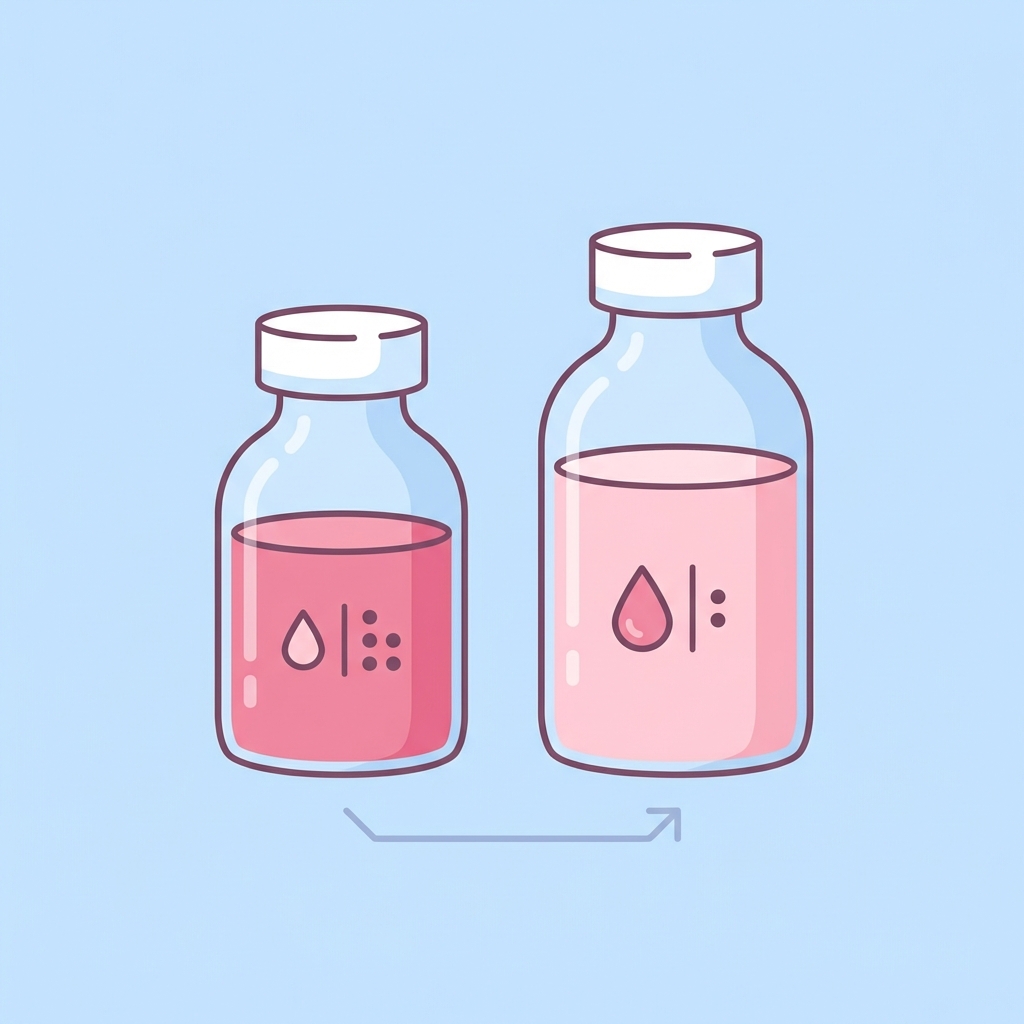
This Mistake Is More Common Than You Think
"Wait — last time the calculator said 5 mL, but now it says 3 mL?"
If you just bought a new bottle of Tylenol from the pharmacy and the calculated dose looks different from what you are used to, it may be because you got a different product.
The Key Question: Same Volume (mL) = Same Dose?
No!
Children's Tylenol suspension comes in two different concentrations:
| Product | Concentration | Acetaminophen per 1 mL |
|---|---|---|
| Tylenol 100 mL | 32 mg/mL | 32 mg |
| Tylenol 200 mL | 50 mg/mL | 50 mg |
The 200 mL product is about 1.6 times more concentrated!
Note for readers in other countries: Acetaminophen concentration differences are not unique to the Korean market. In the United States, infant acetaminophen drops were historically sold at a much higher concentration (80 mg/0.8 mL) than children's liquid (160 mg/5 mL = 32 mg/mL). The infant drops were discontinued and reformulated in 2011 to match the children's concentration (160 mg/5 mL) precisely because of overdose risks from concentration confusion. The Korean market still has two distinct concentrations (32 mg/mL and 50 mg/mL) available simultaneously, making the risk of mix-ups very real.
Why Is This Dangerous?
For example, for a 12 kg (26 lb) child:
| Product | Recommended Dose | Acetaminophen Amount |
|---|---|---|
| 100 mL product | about 5 mL | 160 mg |
| 200 mL product | about 3.2 mL | 160 mg |
What if you give the 100 mL product's dose (5 mL) using the 200 mL product?
5 mL x 50 mg = 250 mg — that is 1.56 times the intended dose, a significant overdose!
And the reverse is also a problem. If you give the 200 mL product's dose (3.2 mL) using the 100 mL product:
3.2 mL x 32 mg = 102.4 mg — only 64% of the needed dose, meaning the medicine may not adequately reduce the fever.
A Close Call
When Yunseul had a fever, our usual 100 mL bottle of Tylenol ran out, so I rushed to the pharmacy. But that pharmacy only had the 200 mL product in stock.
Back home, I was about to give the usual 5 mL when something on the label caught my eye.
"50 mg/mL"
I paused, recalculated, and gave the correct smaller volume. But if it had been the middle of the night and I was half-asleep, I might well have just given 5 mL without thinking.
Product Switch Safety Checklist
Check the label for concentration (mg/mL)
- 32 mg/mL = 100 mL product
- 50 mg/mL = 200 mL product
Always recalculate the dose
- Never carry over the previous product's dose volume
- Use the dosage calculator — select the correct product and recalculate
Do not mix products
- Use only one product at a time
- Label any remaining medicine with its concentration
Which Product Should I Choose?
| Situation | Recommended Product |
|---|---|
| 4 months to under 2 years old | 100 mL product (32 mg/mL) |
| 2 years and older | Either 100 mL or 200 mL |
| Child who struggles to take medicine | 200 mL product (smaller volume needed) |
The 200 mL product's higher concentration means your child needs to take a smaller volume for the same effect, which can be helpful for children who resist taking medicine.
Maximum Daily Dose Differs Too
Maximum daily dose (based on 75 mg/kg/day, for a 12 kg / 26 lb child):
| Product | Max mL per Day |
|---|---|
| 100 mL product | about 28 mL |
| 200 mL product | about 18 mL |
The same number of mL delivers very different amounts of medication — always keep this in mind.
What About Other Fever Medicines?
Good news: ibuprofen (Motrin/Advil), dexibuprofen, and Champ syrup each come in only one concentration.
| Product | Concentration |
|---|---|
| Ibuprofen syrup | 20 mg/mL (standard) |
| Dexibuprofen syrup | 12 mg/mL (standard) |
| Champ syrup (Red) | 32 mg/mL (standard) |
Tylenol is the one that requires extra attention due to its dual-concentration product line.
Summary
- Tylenol 100 mL and 200 mL have different concentrations (32 vs. 50 mg/mL)
- When switching products, always recalculate the dose
- Giving the same mL volume from the wrong product risks overdose or underdose
- Verify the correct dose using the dosage calculator
References
- MFDS (Korea Ministry of Food and Drug Safety) - Approved labeling for Children's Tylenol Suspension
- American Academy of Pediatrics (AAP) - Pediatric Acetaminophen Dosing Guide
- FDA - Concentrated Infant Drops reformulation (2011)
Warning: This article is for general informational purposes. Always check the product label when purchasing, and consult a pharmacist if you are unsure.
Read More
- Fever Medicine Calculator by Doctor Dad - Enter weight and age for accurate dosing
- Can I Alternate Tylenol and Ibuprofen? - Safe alternating guide based on AAP guidelines
- When Should I Give Fever Medicine? - Even at high temperatures, if your child is playing well...
Frequently Asked Questions
What is the difference between Tylenol 100mL and 200mL products?▼
What happens if I use the wrong concentration's dosage?▼
⚠️ Medical Disclaimer: This article is for general informational purposes only and does not replace medical advice. Always consult your child's doctor for health decisions.