When to Give Fever Medicine? (Don't Obsess Over '36.5°C')
Why you should look at your child's condition, not the thermometer number. Clearing up 3 common misconceptions about fever and sharing American Academy of Pediatrics (AAP) based guidelines from an ER doctor dad's perspective.
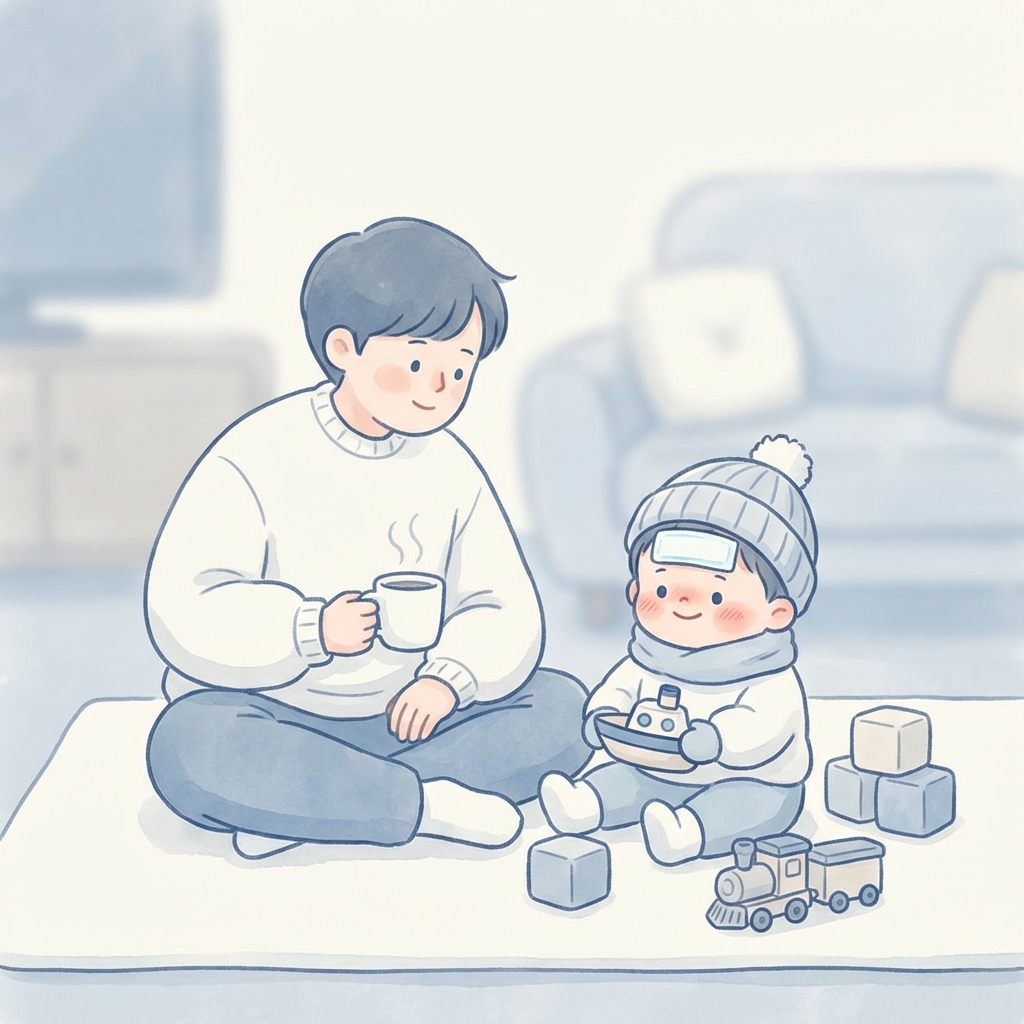
3 AM Anxiety
It's 3 AM. After tossing and turning for 30 minutes, Yunseul suddenly wakes up saying, "Dad, I'm done sleeping. I want to get up." thinking she needs more sleep, I try to put her back to bed but notice her forehead is burning hot.
I check her temperature: 38.7°C (101.7°F)
Should I give her medicine right away, or wait and see?
The Most Important Lesson from the ER
As a surgeon who has worked in the ER, I've seen countless children come in with fevers.
The first thing I check is not the number on the thermometer, but the child's eyes and reaction.
- A child with a 39°C (102.2°F) fever who is still interested in toys
- A child with 38°C (100.4°F) fever who is limp and lethargic
The most important clinical principle I learned:
Fever itself is not a disease, but a normal immune response showing our body is fighting a virus.
Professional organizations like the American Academy of Pediatrics emphasize that fever is a protective mechanism that actually aids the immune system.
Look at the Child, Not the Thermometer
The most heartbreaking moments in the ER were when parents would rush in at dawn saying "The number was so high, I was scared," because of a 39.5°C fever.
Meanwhile, their child was sitting in the exam room, curiously touching my stethoscope.
Questions I Always Ask Parents
- "Is your child playing well?"
- "Are they eating/drinking well?"
- "Do they calm down when comforted?"
If the answer to all three is "Yes", then even with a high temperature, there is usually no major problem.
Signs to Watch For
- Is the child active as usual?
- Are they refusing fluids?
- are they extremely fussy or complaining of pain?
If they are sleeping comfortably despite the fever, there is no need to wake them up to give medicine.
3 Common Myths About Fever
Myth 1: High fever causes brain damage
Fact: Fever caused by infection is controlled by the body's thermoregulatory center and rarely rises above 42°C (107.6°F), the level where brain damage can occur.
Such extreme temperatures usually only happen in 'hyperthermia' caused by external environmental factors (like heatstroke) where the thermoregulatory function itself fails, which is different from fever caused by infection.
Myth 2: Fever must be brought down to normal (37.0°C / 98.6°F)
Fact: The goal of fever treatment is not to return to normal temperature, but to relieve the child's discomfort.
Antipyretics usually lower the temperature by about 1~1.5°C. For example, if a child with 39.5°C fever drops to 38.2°C and becomes less fussy and more comfortable after medicine, this is a very successful treatment response.
Myth 3: If fever doesn't respond well to medicine, it's a serious bacterial infection
Fact: The response to antipyretics cannot distinguish between viral and bacterial infections.
Some viral infections (e.g., Influenza, Adenovirus) cause very high fevers that don't respond well to medicine. Conversely, some serious bacterial infections may only present with mild fever.
To estimate the cause of infection, the child's overall clinical condition, accompanying symptoms, and test results if necessary are much more important indicators.
Key Takeaways
| Situation | Action |
|---|---|
| 39°C but playing well, drinking well | Okay to watch and wait |
| 38°C but limp and fussy | Consider fever medicine |
| Sleeping comfortably | Do not wake them up |
When asked in the ER, I always said:
"If your child is sleeping comfortably, that is the best thing."
References
- American Academy of Pediatrics (AAP) - Clinical Report: Fever and Antipyretic Use in Children (2011, reaffirmed 2018)
- Korean Pediatric Society - Guidelines for Fever Management in Children
- JAMA Pediatrics - Fever phobia revisited: Have parental misconceptions about fever changed in 20 years?
💡 Note: According to AAP guidelines, infants under 3 months with a fever of 38°C (100.4°F) or higher must be evaluated by medical professionals. Also, the goal of giving fever medicine is not to restore normal body temperature but to improve the child's comfort.
📚 Read More
- Fever Medicine Calculator by Doctor Dad - Accurate dosage based on weight and age
- Why Ice Packs and Tepid Sponging Can Be Harmful - Medical evidence summary
- Can I Alternate Tylenol and Motrin? - Safe guide to alternating medicine
Frequently Asked Questions
Should I give fever medicine when my child's temperature reaches 38°C (100.4°F)?▼
Can a high fever cause brain damage?▼
Should fever medicine bring the temperature back to normal?▼
⚠️ Medical Disclaimer: This article is for general informational purposes only and does not replace medical advice. Always consult your child's doctor for health decisions.