Fever Medicine Dosing Intervals: Exactly How Many Hours? (Drug-by-Drug Guide)
Tylenol every 4 hours, ibuprofen every 6 hours — the medical reasons behind dosing intervals, a drug-by-drug interval chart, and what to do when fever returns before the next dose.
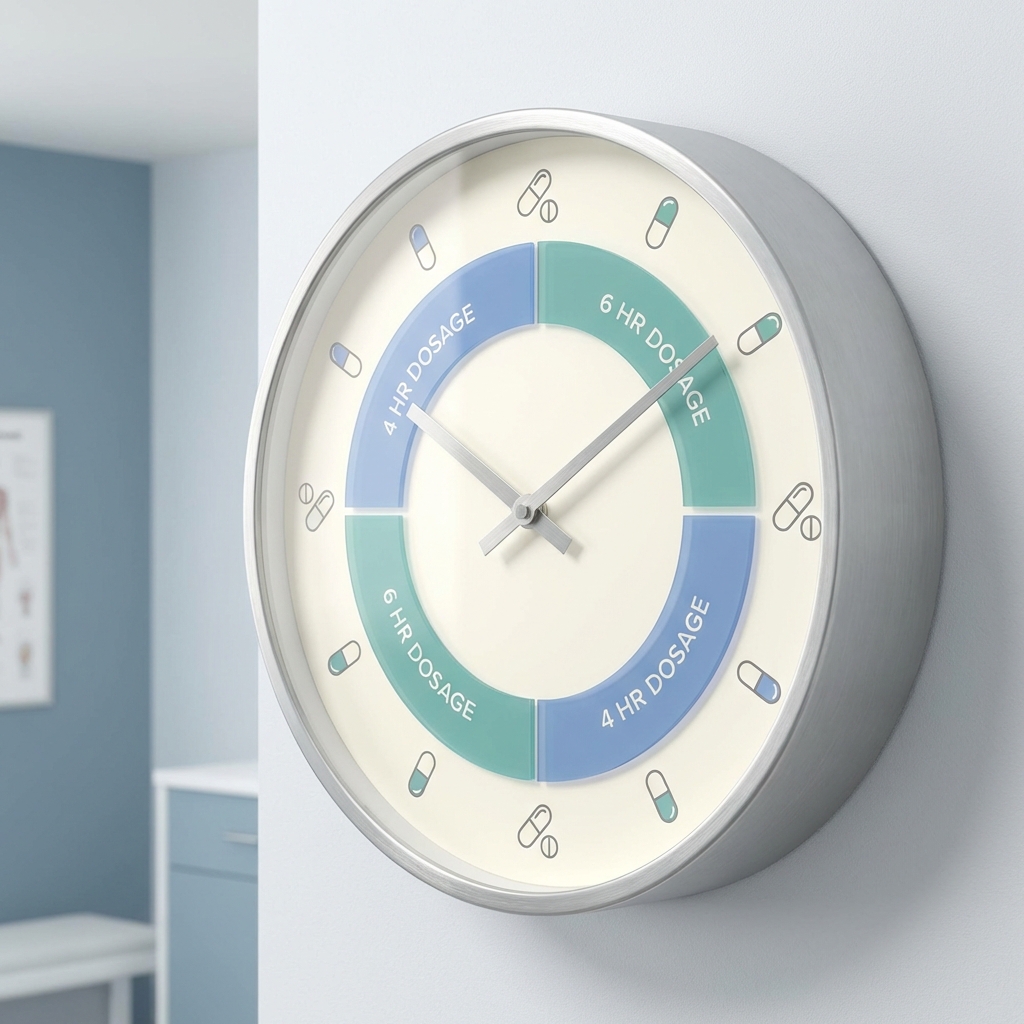
"Was it 11 PM or midnight when I last gave Tylenol?"
It was just after Yunseul's first birthday. She'd had a mild fever during the day, but by night it had climbed past 39°C (102.2°F). I gave her Tylenol around 11 PM and finally got her to sleep, but at 2 AM I woke up to find her forehead burning again.
The thermometer read 38.9°C (102°F). She needed more medicine, but my mind went blank. "Did I give it at 11? Or 11:30?" Neither my wife nor I could remember the exact time. Figuring out whether 4 hours had passed or only 3 — doing that math with sleep-deprived eyes at 2 AM was harder than I expected.
We played it safe and waited an extra 30 minutes. After that night, I made a habit of recording the time in my phone's notes app every time I gave fever medicine. Even as a doctor, my judgment gets cloudy at 2 AM. I can only imagine how stressful it must be for parents experiencing their child's first fever.
Today, I want to explain dosing intervals — why they matter, and what to do when fever returns before the next dose is due.
Drug-by-Drug Dosing Intervals at a Glance
| Drug (Active Ingredient) | Minimum Interval | Max Daily Doses | Duration of Action |
|---|---|---|---|
| Tylenol/Champ Red (Acetaminophen) | 4 hours | 5 doses | 4-6 hours |
| Ibuprofen (Motrin/Advil) | 6 hours | 4 doses | 6-8 hours |
| Dexibuprofen | 6 hours | 4 doses | 6-8 hours |
Key principle: The minimum interval is exactly that — a minimum. If the medicine is still working and your child is comfortable, there is no need to give the next dose right at the minimum interval. Only consider the next dose when fever returns and your child is clearly uncomfortable.
Why Do These Intervals Matter?
Acetaminophen: Why 4 Hours?
Acetaminophen (Tylenol, Champ Red) has a half-life of approximately 2-4 hours. After 4 hours, the drug concentration in the body drops low enough for the next dose to be safe.
Acetaminophen is metabolized by the liver. At appropriate doses it is very safe, but overdosing causes accumulation of a toxic metabolite called NAPQI, which directly damages liver cells and can lead to liver cell necrosis.
- Maximum daily dose: 75 mg/kg/day
- No more than 5 doses per day
- Dosing more frequently than every 4 hours risks toxic metabolite accumulation
For example, for a 15 kg (33 lb) child, the maximum daily dose is 75 x 15 = 1,125 mg. Using Tylenol 100 mL (32 mg/mL), that works out to approximately 35.2 mL/day as the upper limit.
Ibuprofen/Dexibuprofen: Why 6 Hours?
Ibuprofen (Motrin/Advil) and dexibuprofen also have half-lives of approximately 2-4 hours, but because their anti-inflammatory effects last longer, a 6-hour interval is required.
These drugs are excreted by the kidneys. Overdosing can reduce renal blood flow and cause nephrotoxicity, with the risk increasing particularly in dehydrated children who are not drinking well due to fever.
Additionally, as NSAIDs (non-steroidal anti-inflammatory drugs), these medications suppress the protective lining of the gastrointestinal tract, so adequate spacing is needed to protect the stomach and intestines.
- Ibuprofen maximum daily dose: 40 mg/kg/day, no more than 4 doses
- Dexibuprofen maximum daily dose: 28 mg/kg/day, no more than 4 doses
When Fever Returns Before the Next Dose Is Due
Sometimes fever returns just 2-3 hours after giving medicine. The most important factor in deciding what to do is your child's overall condition.
Fever returns 2-3 hours after medicine
    |
Is your child distressed?
    |
[Child is playing and comfortable]
    -> Wait until the next scheduled dose
    -> Offer fluids, keep the environment comfortable

[Child is very distressed]
    -> Consider alternating with a different class of medicine (after consulting your doctor)
    -> Tylenol -> Ibuprofen: possible after 3+ hours
    -> Ibuprofen -> Tylenol: possible after 3+ hours
The idea that fever itself is harmful to children is a common misconception. As explained in When Should I Give Fever Medicine?, fever is part of the body's immune response. If your child has a fever but is eating well, playing, and sleeping comfortably, it is safe to wait until the next scheduled dose.
Important: Switching to a different class of medicine is safer than giving the same medicine ahead of schedule. However, alternating medicines should only be done after consulting your doctor. See the Alternating Fever Medicine Guide for details.
Dangerous Combinations: Never Double Up
Respecting dosing intervals is critical, but equally important is avoiding duplicate dosing of the same active ingredient.
- Tylenol + Champ Red = Acetaminophen + Acetaminophen (overdose!)
- Ibuprofen (Motrin) + Dexibuprofen = Two NSAIDs together (overdose!)
- Cold medicine containing acetaminophen + Tylenol (double dosing!)
Watch for hidden acetaminophen: Many combination cold medicines contain acetaminophen. If your child is already taking a cold medicine, always check the active ingredients before adding Tylenol.
Different brand names do not mean different ingredients. Tylenol and Champ Red are both acetaminophen 32 mg/mL products with different names. Giving both is simply doubling the acetaminophen dose.
Easy Ways to Track Doses
As my story illustrates, relying on memory at 2 AM is a recipe for trouble. Recording doses is the answer.
Method 1: Phone Notes
Write a quick note every time you give medicine. Including the earliest time for the next dose makes it even more useful.
Method 2: Phone Alarm
Set an alarm for the minimum interval right after giving medicine — 4 hours for Tylenol, 6 hours for ibuprofen.
Sample Tracking Log
| Date | Time | Medicine | Dose | Temperature | Next Dose After |
|---|---|---|---|---|---|
| 1/14 | 11:00 PM | Tylenol | 5 mL | 39.2°C (102.6°F) | 3:00 AM |
| 1/15 | 3:30 AM | Ibuprofen | 4 mL | 38.8°C (101.8°F) | 9:30 AM |
This is especially critical when multiple caregivers take shifts caring for a sick child. If mom gives medicine at night and grandmother takes over in the morning, a precise handoff of "what medicine, what time, how much" is essential. Without written records, verbal handoffs can lead to accidental double dosing.
For accurate dosing amounts, enter your child's weight in the dosage calculator.
Maximum Daily Dosage Calculations
Here is a worked example for a 15 kg (33 lb) child showing the maximum daily dose for each medicine.
| Medicine | Single Max Dose | Daily Maximum | Max mL/day |
|---|---|---|---|
| Tylenol 100 mL (32 mg/mL) | 225 mg = 7.0 mL | 1,125 mg | 35.2 mL |
| Tylenol 200 mL (50 mg/mL) | 225 mg = 4.5 mL | 1,125 mg | 22.5 mL |
| Ibuprofen (20 mg/mL) | 150 mg = 7.5 mL | 600 mg | 30.0 mL |
| Dexibuprofen (12 mg/mL) | 105 mg = 8.8 mL | 420 mg | 35.0 mL |
How to calculate:
- Single max dose = max_dose_mg_per_kg x weight
- Acetaminophen: 15 mg/kg x 15 kg = 225 mg
- Ibuprofen: 10 mg/kg x 15 kg = 150 mg
- Dexibuprofen: 7 mg/kg x 15 kg = 105 mg
- Daily maximum = max_daily_mg_per_kg x weight
- Acetaminophen: 75 mg/kg/day x 15 kg = 1,125 mg
- Ibuprofen: 40 mg/kg/day x 15 kg = 600 mg
- Dexibuprofen: 28 mg/kg/day x 15 kg = 420 mg
- mL = mg / concentration (mg/mL)
Since every child's weight is different, always verify the correct dose using the dosage calculator.
Summary
- Acetaminophen (Tylenol, Champ Red): wait at least 4 hours between doses
- Ibuprofen (Motrin/Advil), Dexibuprofen: wait at least 6 hours between doses
- Never give two medicines with the same active ingredient or from the same class at the same time
- Always check cold medicines for hidden acetaminophen
- Recording dose times is the key to safe medication administration
- Verify exact dosing with the dosage calculator
References
- MFDS (Korea Ministry of Food and Drug Safety) - Approved labeling for Children's Tylenol Suspension, Children's Ibuprofen Syrup, Dexibuprofen Syrup
- American Academy of Pediatrics (AAP) - Acetaminophen/Ibuprofen Dosing Tables
- Korean Pediatric Society - Pediatric Antipyretic Use Guidelines
Warning: This article is for general informational purposes. Always check the product label for specific dosing instructions. If your child has underlying health conditions or is taking other medications, consult a doctor or pharmacist.
Read More
- Can I Alternate Tylenol and Ibuprofen? - Safe alternating guide based on AAP guidelines
- Tylenol Dosage by Weight Chart - Quick reference for 5 kg to 30 kg
- How to Give Fever Medicine to Babies - Complete guide from syrup to suppositories
Frequently Asked Questions
How often can I give Tylenol (acetaminophen)?▼
How often can I give ibuprofen (Motrin/Advil)?▼
What if fever returns before the next dose is due?▼
⚠️ Medical Disclaimer: This article is for general informational purposes only and does not replace medical advice. Always consult your child's doctor for health decisions.