Ice Packs and Tepid Sponging for Fever: Do They Actually Work? (Medical Evidence Review)
Why ice packs and tepid sponge baths can be harmful for feverish children. A comprehensive review of evidence from the AAP and Cochrane Database on proper fever management.

2 AM Dilemma
It is 2 AM. Your child's ragged breathing jolts you awake. The palm of your hand on their forehead feels alarmingly hot. The thermometer reads 39.5°C (103.1°F).
In moments like these, panicked parents instinctively reach for an ice pack from the freezer, or grab a lukewarm wet towel to wipe the child down from head to toe.
I remember when Yunseul had her first fever, my mother-in-law came in with a cold washcloth saying, "This is what we always did in the old days."
But do these methods actually work? Could they actually be doing more harm than good?
"Ice Packs Are Dangerous" — The Critical Difference Between Fever and Hyperthermia
Let me start with the most important fact.
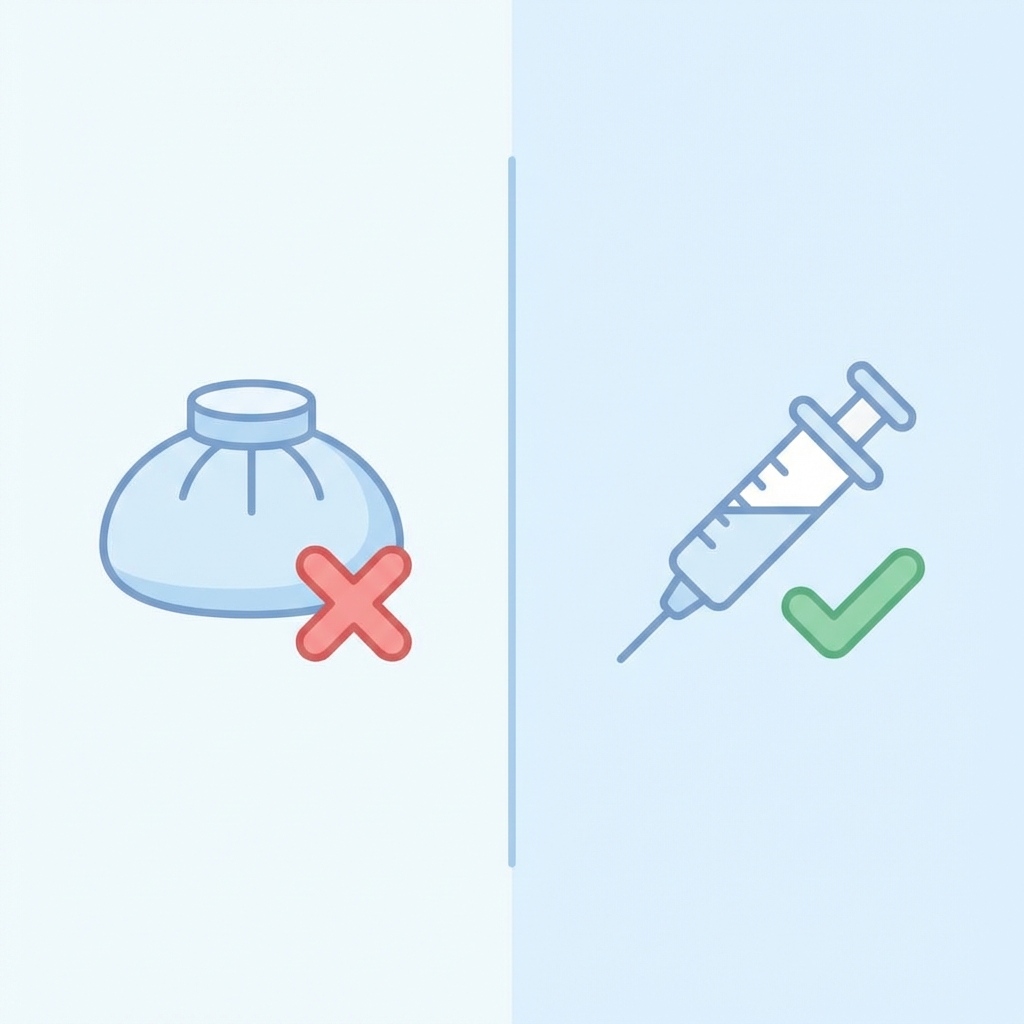
Using ice packs on a feverish child is dangerous and is not recommended.
Many people make this mistake because they confuse 'Fever' with 'Hyperthermia.'
Fever vs. Hyperthermia: What's the Difference?
| Fever | Hyperthermia | |
|---|---|---|
| Cause | Immune response (intentional) | Thermoregulation failure |
| Temperature control | Brain sets a higher target temperature | Control system overwhelmed |
| Examples | Cold, flu, infections | Heatstroke |
| Ice packs | Not recommended | Necessary |
-
Fever: When fighting an invader like a virus, our body deliberately raises its temperature as a defense strategy. The thermoregulatory center in the brain essentially declares, "Our target body temperature is now 39°C (102.2°F)!" It is a deliberate upward shift of the body's temperature set point.
-
Hyperthermia: In conditions like heatstroke, prolonged exposure to extreme heat causes the thermoregulatory center to fail entirely. Without any set point, temperature rises uncontrollably to 40°C (104°F), 41°C (105.8°F), and beyond.
Ice packs are essential for hyperthermia (heatstroke) patients whose thermoregulation has failed, but they are harmful for feverish children whose bodies are executing a deliberate immune response.
Why Ice Packs Are Dangerous for Feverish Children
When you apply an ice pack to a child whose body has "set" a target temperature of 39°C (102.2°F), the body perceives this cooling as a threat.
-
Vasoconstriction traps heat inside: When cold contacts the skin, blood vessels constrict, actually trapping heat within the body's core. The skin may feel cooler, but core temperature stays the same or may even rise.
-
Shivering drives temperature higher: When the child starts shivering, muscles generate heat in an effort to reach the "set" target temperature of 39°C. Research shows that shivering doubles oxygen consumption, putting significant strain on the child's body.
-
Metabolic burden spikes: A body already exhausted by fever now has to fight against the cold stimulus as well, burning energy at twice the rate.
"What About Lukewarm Sponge Baths?" — The Uncomfortable Truth from Clinical Research
If ice packs are out, what about wiping the child down with lukewarm water (84-90°F / 29-32°C)? It seems gentler than ice, but the latest research results were surprising.
The Effect Is Temporary, with Minimal Additional Benefit
When multiple clinical trials were analyzed together, tepid sponging showed only a temporary effect with virtually no lasting benefit.
| Time Point | Result |
|---|---|
| First 15-60 minutes | Temperature appears to drop slightly faster |
| After 2 hours | No difference compared to antipyretic alone |
| Final outcome | Minimal benefit relative to the discomfort caused |
A 2013 meta-analysis produced a striking finding: tepid sponging combined with antipyretics was actually less effective at reducing temperature at the 2-hour mark compared to Tylenol alone.
The Biggest Problem: Discomfort and Shivering
According to the Cochrane Database's large-scale analysis:
- Children who received tepid sponging had a 5-fold increase in risk of shivering and goosebumps
- Shivering causes muscles to generate additional heat, counteracting the cooling
- Most children exhibited crying and irritability
The core conclusion of the research: the significant increase in a child's discomfort far outweighs the minimal or nonexistent additional benefit in temperature reduction.
AAP Official Recommendation
"Tepid sponging is not recommended for the treatment of fever."
This is the official position of the American Academy of Pediatrics (AAP), published in 2018.
The global standard for managing pediatric fever is not about lowering the number on the thermometer, but about helping the child stay comfortable while their body fights the illness.
Three Principles of Proper Fever Management
1. Adequate Hydration
Preventing dehydration from fever is the top priority. Offer breast milk, formula, water, or electrolyte drinks in small, frequent amounts.
2. Comfortable Environment
Not too hot, not too cold — a single layer of light clothing is appropriate. Avoid bundling the child in heavy blankets.
3. Antipyretics When Needed
Use age-appropriate doses only when the child is uncomfortable. Do not try to force the temperature back to normal.
| Consider Fever Medicine When | It's OK to Just Monitor When |
|---|---|
| Child is listless and distressed | 39°C (102.2°F) but playing happily |
| Refusing fluids | Drinking well |
| Cannot sleep, is fussy | Sleeping comfortably |
In Closing
I, too, once tried tepid sponging — partly because of the well-meaning "this is what we always did" advice from grandparents, and partly from a parent's restless urge to do something for a sick child.
But after studying the scientific evidence, and more importantly, seeing Yunseul become more fussy and distressed during sponging, I realized: sometimes, doing nothing is the wisest way to help your child.
Focus on the child's overall condition, not the number on the thermometer. Adequate hydration, rest, and appropriate antipyretics when needed — this is what decades of research have proven to be the most effective and safest approach to managing fever.
Above all, if your child looks significantly more unwell than usual, do not hesitate to seek medical attention. A parent's instinct is sometimes more accurate than a thermometer.
References
- American Academy of Pediatrics (AAP) - Clinical Report: Fever and Antipyretic Use in Children (2011, reaffirmed 2018)
- NICE (UK) - Fever in under 5s: assessment and initial management (tepid sponging "strongly not recommended")
- Cochrane Database - Physical methods for treating fever in children (Meremikwu M, Oyo-Ita A, 2003)
- Clinical Infectious Diseases - External Cooling in the Management of Fever (2000)
- Pediatrics International - Effectiveness of Antipyretic with Tepid Sponging Versus Antipyretic Alone in Febrile Children: RCT (2017)
- Korean Pediatric Society - Pediatric Fever Management Guidelines
Read More
- When Should I Give Fever Medicine? - Look at your child, not the thermometer
- Can I Alternate Tylenol and Ibuprofen? - Safe alternating guide based on AAP guidelines
- Fever Medicine Calculator - Calculate accurate dosing instantly
Frequently Asked Questions
Should I put an ice pack on my child's forehead during a fever?▼
Does tepid sponge bathing help reduce fever?▼
What should and shouldn't I do for a feverish child?▼
⚠️ Medical Disclaimer: This article is for general informational purposes only and does not replace medical advice. Always consult your child's doctor for health decisions.